
Long Beach City Directory Shelf
Long Beach city directories are a local-library and archive trail, not one verified uninterrupted online run. City and library materials describe name and address searching in local volumes from about 1899 or the early 1900s through the 1960s. The exact publisher sequence, annual gaps, and first and last issue have not been confirmed in a current catalog. Start with the Long Beach Public Library reference desk, give a surname or address and an approximate year, and ask which volume, microfilm, database, or archival route applies.
That careful wording matters. A licensed national directory collection covers many places and years, but it does not prove continuous Long Beach coverage. A successful directory search identifies a published entry for a particular year. It does not establish that every person at the address was counted, nor does it turn a historical listing into a current address claim.
| Collection | Years | Where held | Access |
|---|---|---|---|
| Long Beach city directories | c.1899 or early 1900s to the 1960s; gaps unconfirmed | Public Library and local historical collections | Ask the reference desk for name or address routes. |
| Library directory database | 1821 to 1989 across the United States | HeritageQuest or ProQuest access | Licensed collection, not proof of a full Long Beach run. |
| Long Beach High School yearbooks | 1925 to 1990 stated in 2022 program material | Library and New York Heritage route | Confirm present item access with staff. |
| Long Beach Life | 1928 to 1954 microfilm run | Long Beach Public Library | Reference and microfilm research. |
Note: Record the edition, page, spelling, and nearby street clues before leaving a volume, since those details make the next search reproducible.
Long Beach Library Directory Routes
The library is the principal local gateway for directory research. Its main building is at 111 West Park Avenue, and the system also has West End and Point Lookout branches. At the reference or local-history desk, state whether the target is an occupant, a business, an obituary, a school connection, or a photograph. That context helps staff choose between local volumes, yearbooks, newspapers, census access, family histories, probate material, and local indexes. The city’s research-links page points to the directory, yearbook, historic-photo, archive, and history-index routes together.
The Long Beach Public Library Digital Archive is a public landing point for local material. The available research did not verify a particular directory page or item-level coverage, so search results and collection scope should be checked with staff rather than assumed from the landing page.
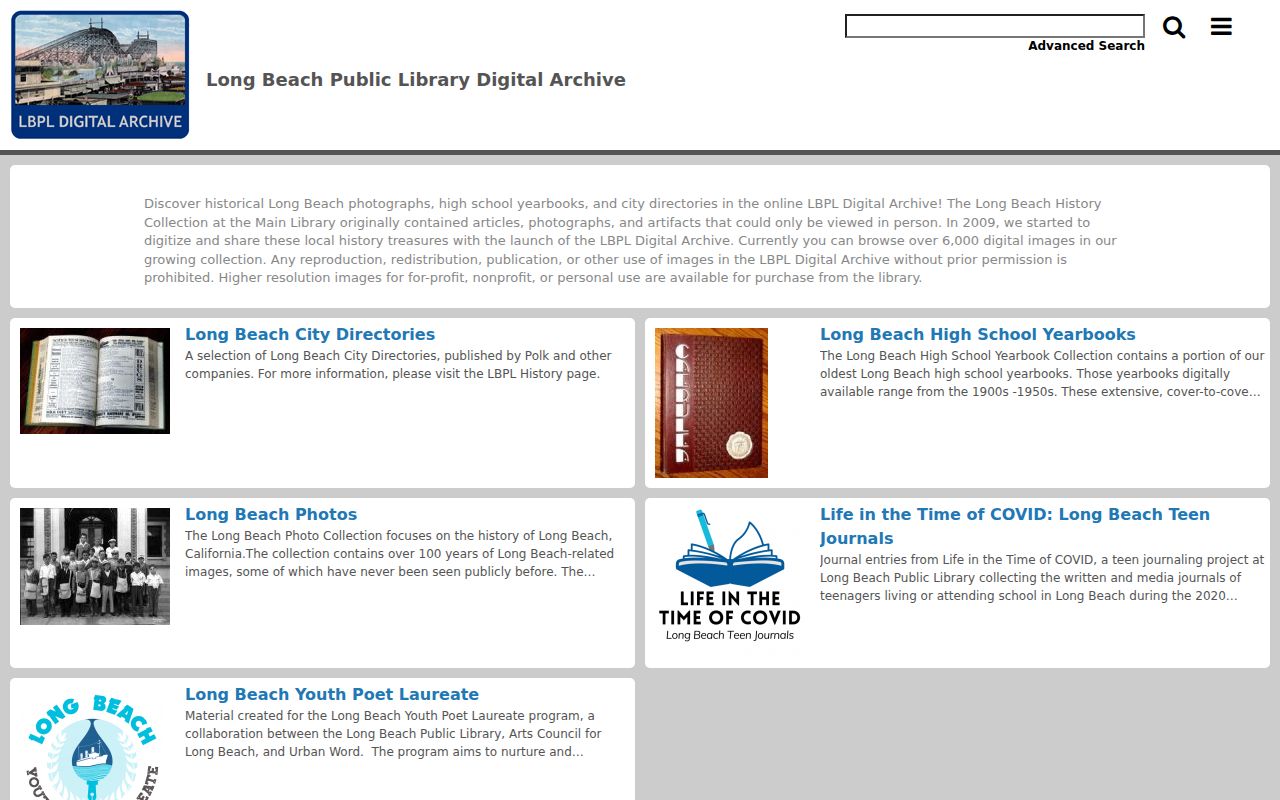
The archive view is useful as a route into the library’s digital holdings, but each entry still needs its own edition year and page citation. When an online item is missing, the local desk, the library catalog, and on-site collections are the documented alternatives.
Long Beach Archive Research Help
The Long Beach Historical Society adds material that may not appear in the library catalog. Its museum and archive hold city-management records, photographs, postcards, city guides, maps, ephemera, and audio or visual material described from the late 1800s to the present. Research is by appointment, so a request should name the street, person, approximate period, and the type of item sought. The Society’s records can give neighborhood context around a directory entry without pretending to be a complete roll of residents.
The Historical Society archive reports an ongoing LIU Preservica digitization project. That is a practical insider tip: ask for collection-level finding aids or an appointment when a catalog search comes up empty, because digitization is still in progress and the public page does not provide a complete item-by-item index.
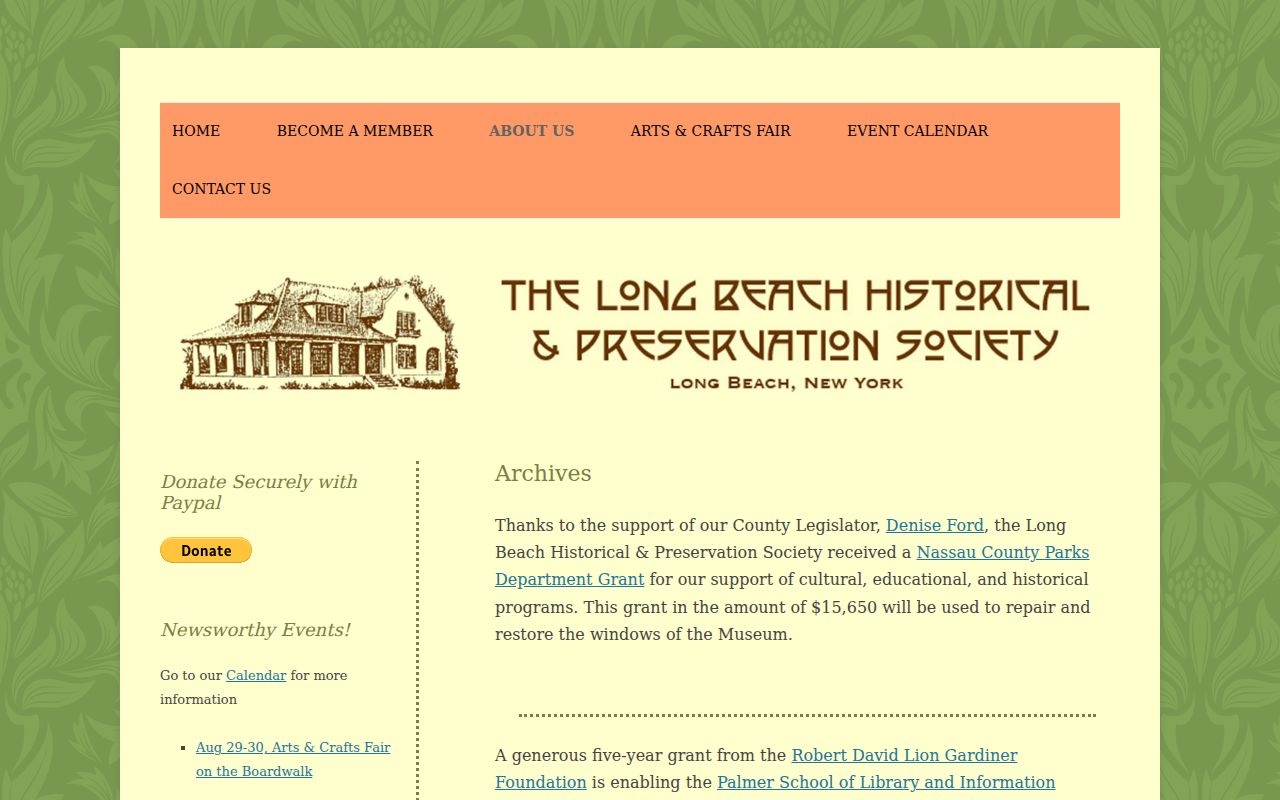
The archive route is especially helpful for maps, photos, and city guides that can test a directory address. Preserve the source date on each item, since a building image, a map, and a directory entry answer different historical questions.
How a Long Beach City Directory Reads
A Long Beach directory entry is a compact lead, not a modern profile. Official descriptions confirm person-name and street-address searching and say that an entry may include a profession, work location, or spouse. The research did not verify an actual live directory page, so no unconfirmed abbreviation, owner mark, widow notation, or printed format should be treated as universal. Transcribe the exact text, publication year, volume, page, and whether the line was in an alphabetical or reverse section.
| Name | Capture the surname, given name, initials, and spelling exactly as printed. |
|---|---|
| Address | Record the house number and street, then compare it with nearby years. |
| Spouse information | May appear depending on the edition and can suggest a household link. |
| Profession or work location | May appear and can help distinguish people with the same name. |
| Edition details | Preserve the year, page, volume, and section for later verification. |
- Criss-cross directory
- A reverse, street-ordered section that may lead from an address to a listed household.
- Householder index
- An index focused on the person heading a listed household, which may omit other people there.
- Abbreviation key
- The edition’s own explanation of shortened terms; inspect it before assigning meaning to a mark.
When a number disappears, test street spelling, directional wording, nearby cross streets, and the tax roll or a Sanborn map. No verified Long Beach renumbering year was located, so an apparent address change should remain a question until the supporting records agree.
Long Beach City Directory Dates and Gaps
Long Beach’s record history explains why the directory shelf needs context. Nassau County formed in 1899, while Long Beach became a city in 1922 after the hotel, railroad, and boardwalk era. That history distributed early evidence across maps, deeds, newspapers, directories, and later municipal records. The local directory era is described as roughly 1899 or the early 1900s through the 1960s, but the annual sequence remains unverified. The 1911 filed Map of Estates and the 1923 West End map can help bridge an old directory label to a legal description.
| 1899 | Nassau County formed from Queens County. |
|---|---|
| 1922 | Long Beach incorporated as a city, strengthening the municipal record layer. |
| 1925 | A surviving New York State census provides a household checkpoint. |
| 1960s | Approximate end of the locally described directory era, subject to collection verification. |
The federal 1890 schedule is a national loss, and New York state census records from 1801 through 1905 were heavily lost in the 1911 State Library fire. Those gaps make adjacent directory years and newspaper microfilm more valuable, but they do not allow a missing person or address to be inferred as a fact.
Tracing Long Beach City Directory Households
Use the printed volumes to build a year-by-year household trail. Begin with the first confirmed entry, not a guessed date. Follow the same surname through nearby editions, compare the street number, and write down each change in spelling, spouse information, occupation, or work location. If a reverse section exists, look up the address and then return to the alphabetical section. The full historical collection route is different from modern parcel work, which belongs with the Long Beach by-street directory.
- Find the earliest confirmed name or address entry and note its edition year and page.
- Search the next available directory years, keeping moves and spelling variants in a simple sequence.
- Use the reverse or criss-cross section, when present, to test the street number against the household name.
- Pair the directory year with the nearest federal census or the 1915 and 1925 New York State censuses.
- Use newspaper microfilm, a deed, or a probate file to confirm a move, death, or household transition.
A name dropping from a directory can mean a move, death, omission, or a changed listing practice. It does not answer which one on its own. The library’s census resources, newspapers, and local-history material are the documented ways to test the change.
Long Beach Directory and Census Checks
Directory years fill the long spaces between censuses, while census schedules provide a fuller household snapshot. Federal schedules generally become public after 72 years. New York’s 1915 and 1925 state censuses survive at the Archives as series A0275 and A0276, though they are not comprehensively indexed by the Archives page. Pair a directory address with street, age, spouse, children, and occupation before concluding two same-name results are the same household.
The New York State Library catalog also identifies Long Beach Life newspaper holdings, including a library microfilm run from 1928 to 1954. A notice or obituary can supply a date or family connection for a directory lead, but it is not a certified vital record.
Long Beach Directory Deed-Search Myth
A common genealogy shortcut does not work for Nassau land records: FamilySearch’s New York Land Records, 1630 to 1975 collection excludes Nassau County. A Long Beach city directory can still point to a name or address worth pursuing, but the deed trail belongs with the Nassau County Clerk, the Map Room, and the official land-record route. Use it as a dated clue, then verify ownership history with the original custodian.
This limit is useful because it prevents a blank result from being mistaken for proof that no deed exists. The County Clerk maintains public counter, mail, drop-box, delivery, and online channels, while older land books may require the Clerk’s public facilities. A directory, map, and deed can reinforce each other only when their dates and legal descriptions are kept distinct.