
Long Beach Resident Lookup Sources
A Long Beach resident lookup has no single official master list. The Nassau assessment record is useful when a person may be a current assessed owner. The state voter tool can confirm a registered-voter match. Court and probate indexes identify a named party in a case or estate, while the library and state vital indexes add historical context. Each source has a different boundary. An owner mailing address, for example, may be outside Long Beach and does not establish that every person at a property lives there.
| Record | What It Can Confirm | Where | Access |
|---|---|---|---|
| Assessment roll and parcel | Assessed owner, situs, SBL, mailing clue | Nassau Land Records Viewer | Public address or SBL search; Captcha may appear. |
| Voter registration | Registered-voter match and registration context | New York voter lookup | Known-person search; protected records are excluded. |
| Local civil index | Party name, case number, type, and status | WebCivil Local | Public index; sealed matters are not shown. |
| Vital records | Historical event clue or eligible certified copy | Long Beach City Clerk | Relationship and application rules apply. |
| Probate and state files | Estate role, custody status, registry result, or public credential | WebSurrogate | Scope and restrictions vary by record type. |
Start with the record that fits the fact already known. An address is best tested in the assessment system. A case number belongs in the court index. A death-date clue points to probate or an archival vital index. The City Assessor maintains Long Beach assessment records, and the county viewer supplies the broad public parcel interface. Use the SBL, meaning Section, Block, and Lot, when an address is ambiguous.
Note: A public record can confirm a limited fact without proving that a person currently lives at the address.
Verify a Long Beach Resident
Use two independent record types before treating a name match as useful. The assessment roll can tie a property to a current assessed owner, but not to every household member. The voter lookup is narrower still: it is for a registered voter and may omit protected records. A court result identifies a party in a proceeding, not necessarily a current Long Beach address. Compare date, middle initial, surname variants, street, family connection, and the role shown by the record.
- Find the parcel by street address or SBL in the Nassau Land Records Viewer and record the property location, owner mailing field, and deed book or page clue.
- Check the Nassau County Clerk land route for a deed party and recording date. If the online path is incomplete, use the County Clerk public facilities, mail, delivery, drop box, or counter request.
- Run a known-person search in the state voter lookup only when the person is likely registered, then compare the returned context with the parcel record.
- Use court, probate, directory, or vital-index evidence to resolve a same-name conflict. Request a certified record only from the proper custodian and only when eligible.
“Current” is the key word. An old directory, yearbook, deed, court appearance, or business filing can place a person in a past role. It should never be stretched into a claim about a present residence. When the person is a possible heir, the estate route is usually stronger than a broad name search: WebSurrogate accepts a party name and date of death, while older Nassau documents may require the Surrogate’s Court public computer.
- Docket
- A court’s case-file trail, usually identified by a case or index number and showing events or filings allowed for public access.
- Index versus image
- An index lists searchable facts such as names and dates. The image is the underlying document, which can have separate access rules.
- Certified copy
- A custodian-issued copy certified for an official purpose. It is different from a search result or an informational image.
Long Beach Court Name Checks
Long Beach City Court local civil matters are searchable through WebCivil Local. Its Party Search can use an index number, party, attorney, or judge name, plus Court, Case Type, filing year, status, and future-appearance controls. Party names are generally indexed last name first. The system updates during the day, but sealed cases are excluded. Use the official court page to confirm current contact details before calling because published phone listings differ.
| Search control | How it helps identify a result |
|---|---|
| Party Name | Try surname spelling variants and first-name forms; a party match alone is not an address match. |
| Court and Case Type | Limits a broad name to Long Beach City Court or another available Nassau local court and a case category. |
| Year and Status | Separates filings by time and lets a search focus on open or all indexed cases. |
| Future Appearances | Shows a setting for forthcoming dates, not a full historical criminal record. |
WebCriminal is a different system for selected future-appearance information. It searches a defendant or corporation name, or a case or summons number, and may have update delays. For estates, WebSurrogate has name, file, old-index, will, and index-book modes. Nassau files on or after February 19, 2014 may link to documents online; older material uses the public terminal at the Surrogate’s Court. Court results are a verification layer, not a neighborhood directory.
New York’s e-filed case system has warned users about fraudulent notification emails. Enter the official court address directly rather than following an unexpected message link.
Long Beach Vital Record Limits
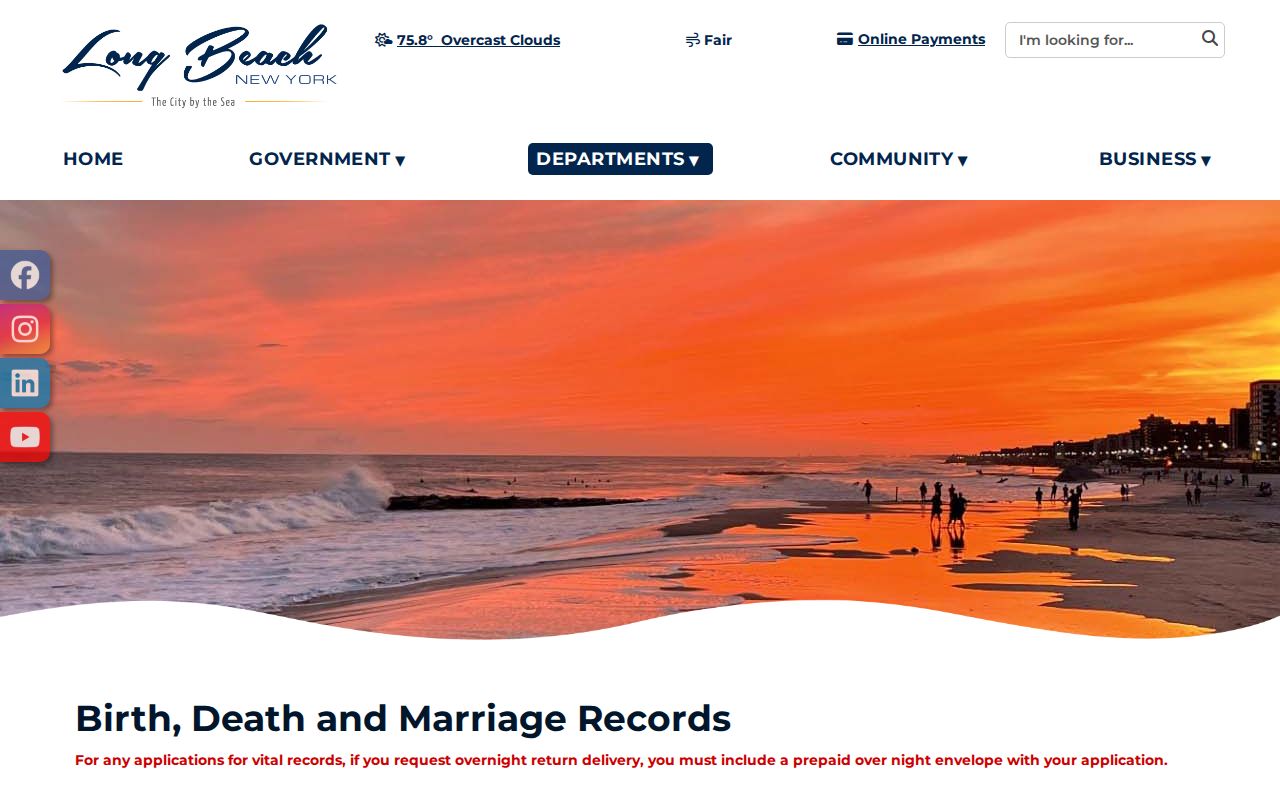
The Long Beach City Clerk is the first local custodian for a birth, death, or marriage event recorded in the city. City vital records begin in 1913, with registered marriages beginning in 1922. Local copies cost $10, but eligibility matters: birth copies normally go to the named person or parent; death copies have stated family, claimant, medical-need, and court-order routes; marriage copies generally go to the spouses or a documented proper-purpose applicant. The local process has in-person and mail routes, and mail applications require the stated notarization, identification, and proof materials.
The Long Beach vital-record instructions show the application path rather than an open name database.
For family-history work, the state route is different. The New York State Archives vital index is microfiche, not an online name search, and supplies basic index information. State genealogy requests use the 75-year birth, 50-year death, and 50-year marriage thresholds described by the Department of Health. The state certified-copy mail route states a $30 fee and ordinary processing of 10 to 12 weeks. A restricted certificate has no general FOIL shortcut.
The Long Beach Owner-Mail Myth
A common Long Beach resident lookup mistake is treating a tax mailing address as a residence. The Nassau roll distinguishes the property location from the current owner’s address, and it also tracks the tax map parcel, property class, exemptions, values, and deed clues. A mailing field can be outside Long Beach because it is where an owner receives notices. It may be useful for comparing records, but it does not identify all occupants of the parcel.
The New York voter lookup is another narrow confirmation tool. Its form includes County, last name, first name, date of birth, ZIP Code, and address inputs. Select Nassau County and use 11561 when it fits the known city address. Cookies, JavaScript, and a Captcha can affect the live form, so do not try to bypass those controls.
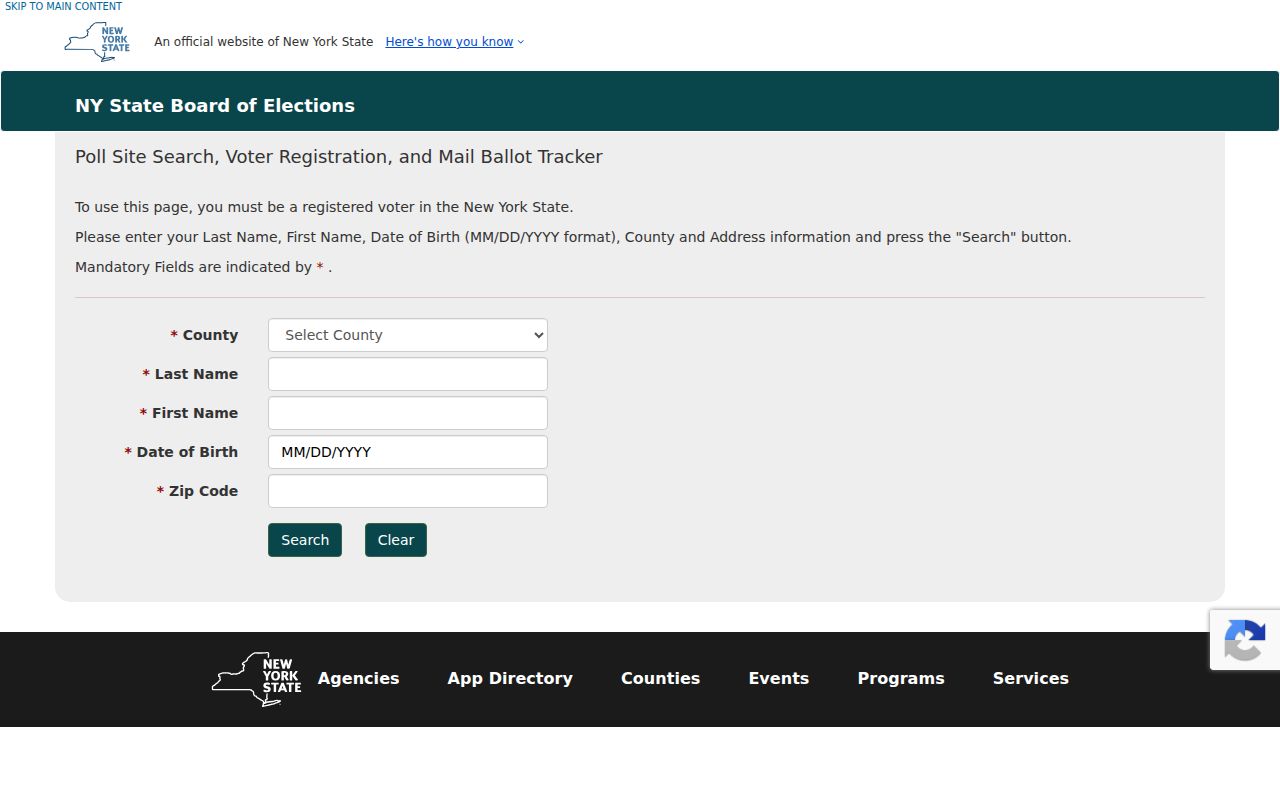
New York Election Law §3-103(5) requires an elections purpose for voter-registration data requests. A statewide FOIL request should state the requested scope, contact details, preferred format, and that purpose. The lookup is not a downloadable list of every Long Beach resident, and voter records can be protected or no longer current.
Note: The property location, SBL, and owner mailing field answer different questions and should be recorded separately.
Long Beach Resident Lookup Status Searches
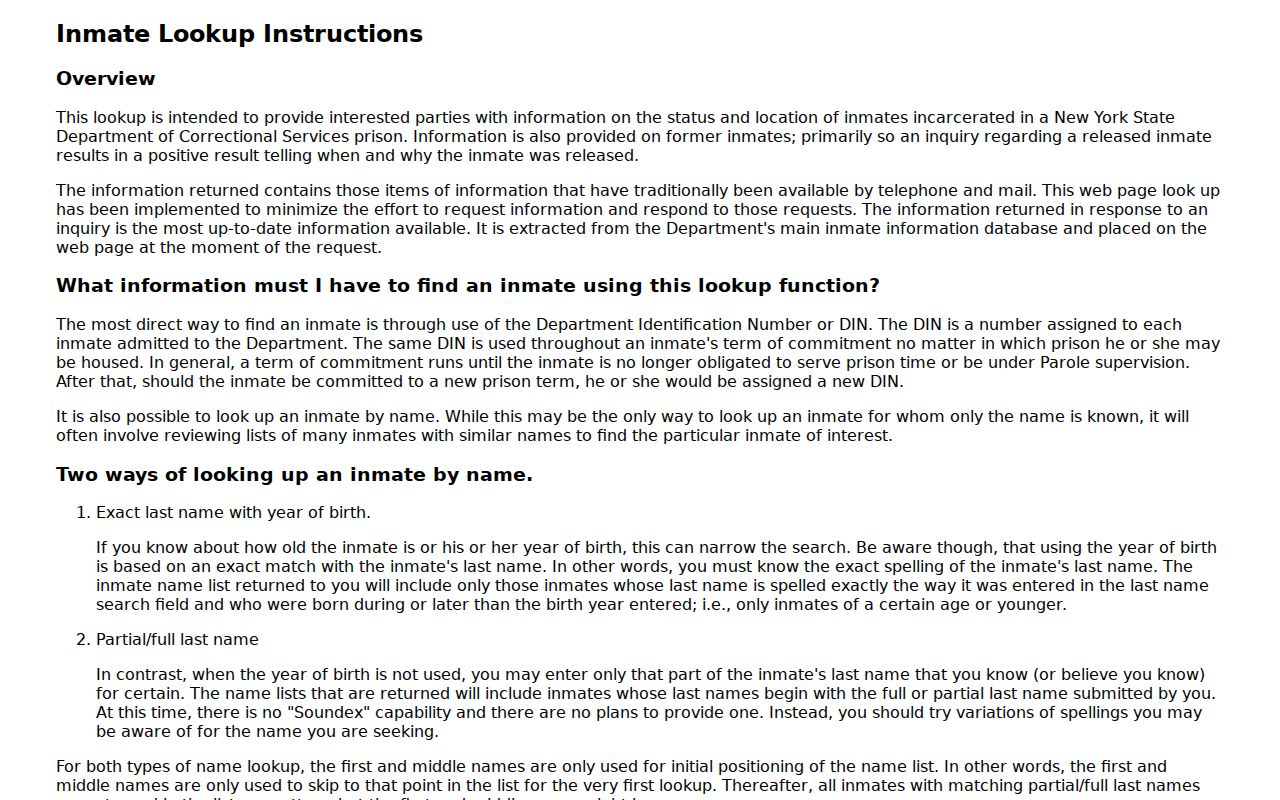
State status tools have narrow subject matter and should stay that way. The NYS DOCCS lookup searches by name and year of birth or by DIN, the Department of Corrections and Community Supervision identification number. It reports custody or status information and may include former incarcerated people. It does not establish a current Long Beach address. Read the live database disclaimer and match only the fields the state returns.
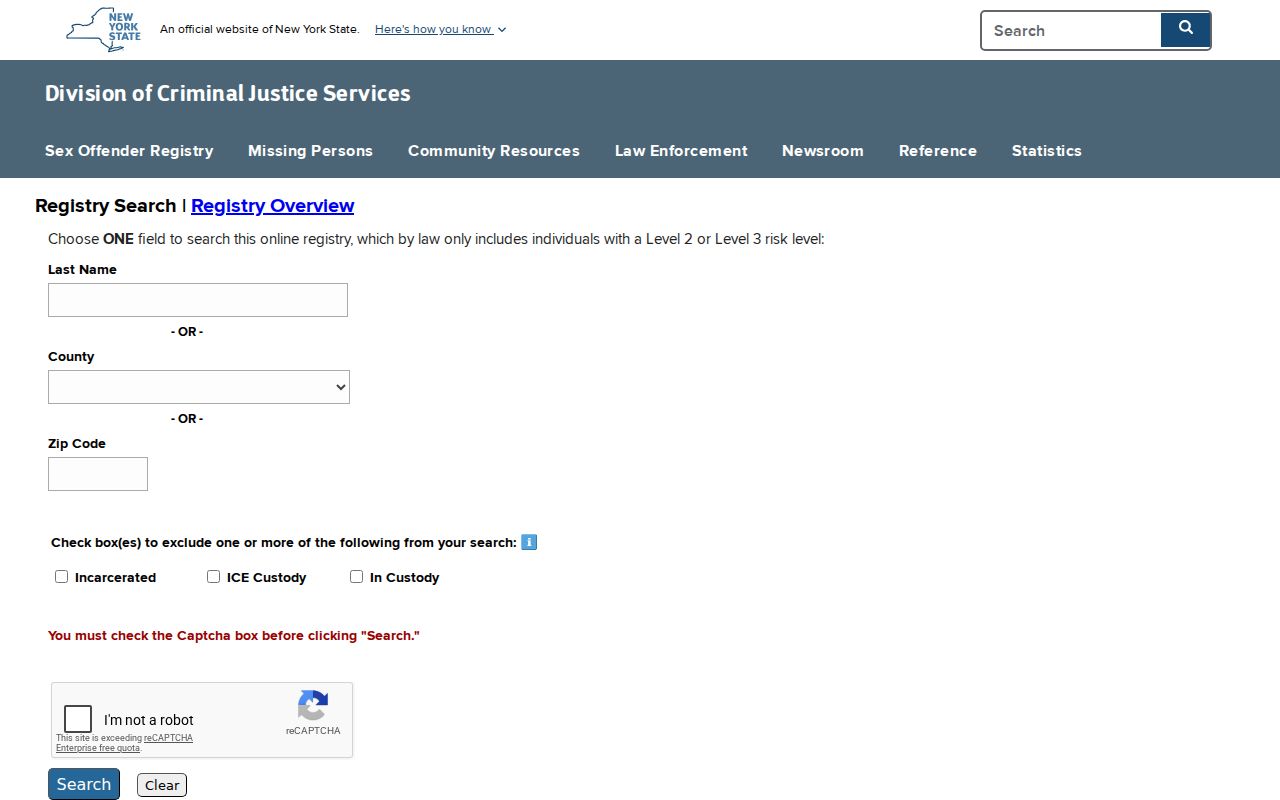
The NYS DCJS Sex Offender Registry has last-name, county, and ZIP search modes and publishes online information for Level 2 and Level 3 registrants subject to its disclaimer and Captcha. Use it only for its stated public-safety purpose and do not expand a registry return into claims about household members or unrelated people.
For a public professional identity, the New York State Office of the Professions verifies a selected profession by name or full license number. A business identity may instead belong in the Department of State entity database, where an agent or service address is not a home address.
Long Beach Resident Lookup Privacy
A missing record can be the correct result. New York’s Address Confidentiality Program gives eligible participants a substitute Albany mailing address and protects the actual location. The confidential-voter process keeps accepted voter records separate and unavailable to the public except election officials. Sealed court material, restricted vital records, and federal Driver’s Privacy Protection Act limits on DMV data also keep personal details out of a routine search.
Do not publish full dates of birth, signatures, Social Security numbers, driver-license numbers, or an actual protected address. If a parcel, voter, or court record appears wrong, contact its original custodian. The Assessor handles assessment information, the Board of Elections handles registration records, the City Clerk handles local certificates, and the court clerk handles court files.
Lawful use. Use Long Beach records for personal, lawful research and public-source verification. Never use a result to stalk, harass, intimidate, or harm another person.
FOIL for Long Beach Lookup Gaps
When an official online result is incomplete, use the custodian’s documented fallback instead of guessing. Nassau County Clerk land records can be searched through the online route, but the official pages do not state an exact historical online cutoff. The Clerk also offers public facilities, mail, delivery, lobby drop box, and counter channels. For a pre-2014 Nassau probate document, use the Surrogate public terminal. For historical names and addresses, ask Long Beach Public Library reference staff or the Historical Society rather than assuming a scan exists online.
New York FOIL, Public Officers Law Article 6, §§84–90, can request an existing accessible agency record. Describe the person or address, approximate date, record type, preferred format, and a return contact. It does not require an agency to create a biography or release exempt material. Agencies generally must grant, deny, or acknowledge a request within five business days, then provide a reasonable approximate date when more time is needed. Nassau procedures and the state law also allow a written appeal when a request is denied.
For a one-person question, a library reference request can be more precise than a broad public-record request. Give the name, known year, street, school, or civic connection, and ask for the collection or index that could hold that fact. That keeps the request tied to documented Long Beach sources.